What is NotebookLM?
NotebookLM is a research assistant powered by an advanced language model but the sources of truth come entirely from your own documents.
Its main purpose is to generate knowledge from a collection of materials you provide. It acts like an AI memory dedicated exclusively to your project or area of study. Instead of searching the web, the model “reads” and reasons over your papers, meeting notes, transcripts, drafts, or videos.
How does it work?
- You upload your documents (PDFs, Google Docs, etc.). These files are grouped into a Notebook, which serves as a workspace and provides contextual information for the model.
- When you ask a question, the language model doesn’t rely on its general knowledge. It strictly uses the information contained in your uploaded sources to generate an answer. This approach drastically reduces hallucinations and irrelevant outputs.
- One of NotebookLM’s most technically robust features is that it attempts to cite exact pages or sections from your documents that support its responses.
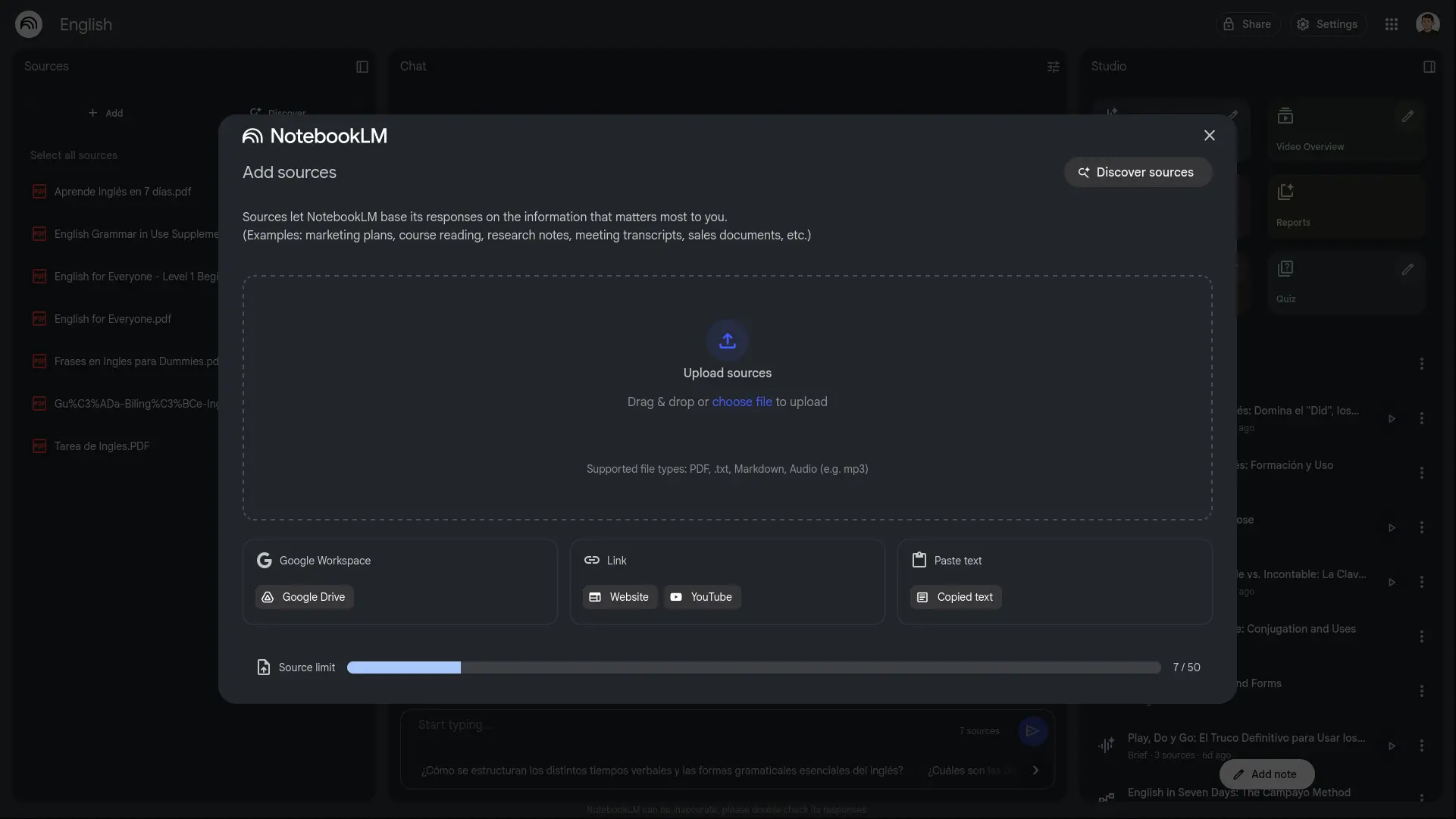
NotebookLM allows you to upload websites, YouTube videos, PDFs, mp3 files, and more.
Advantages
Evidence-Based Q&A
You can chat directly with NotebookLM’s AI by asking specific questions about your uploaded materials. The key advantage is that every response includes direct citations pointing back to the original sources you provided.

Video generated in NotebookLM
Study Tools
To reinforce learning of new technical concepts, NotebookLM can automatically generate Flashcards and Quizzes from your notes or research papers. You can customize the difficulty and topic. If you get a question wrong, the “Explain” option generates a detailed explanation with citations to the original material.
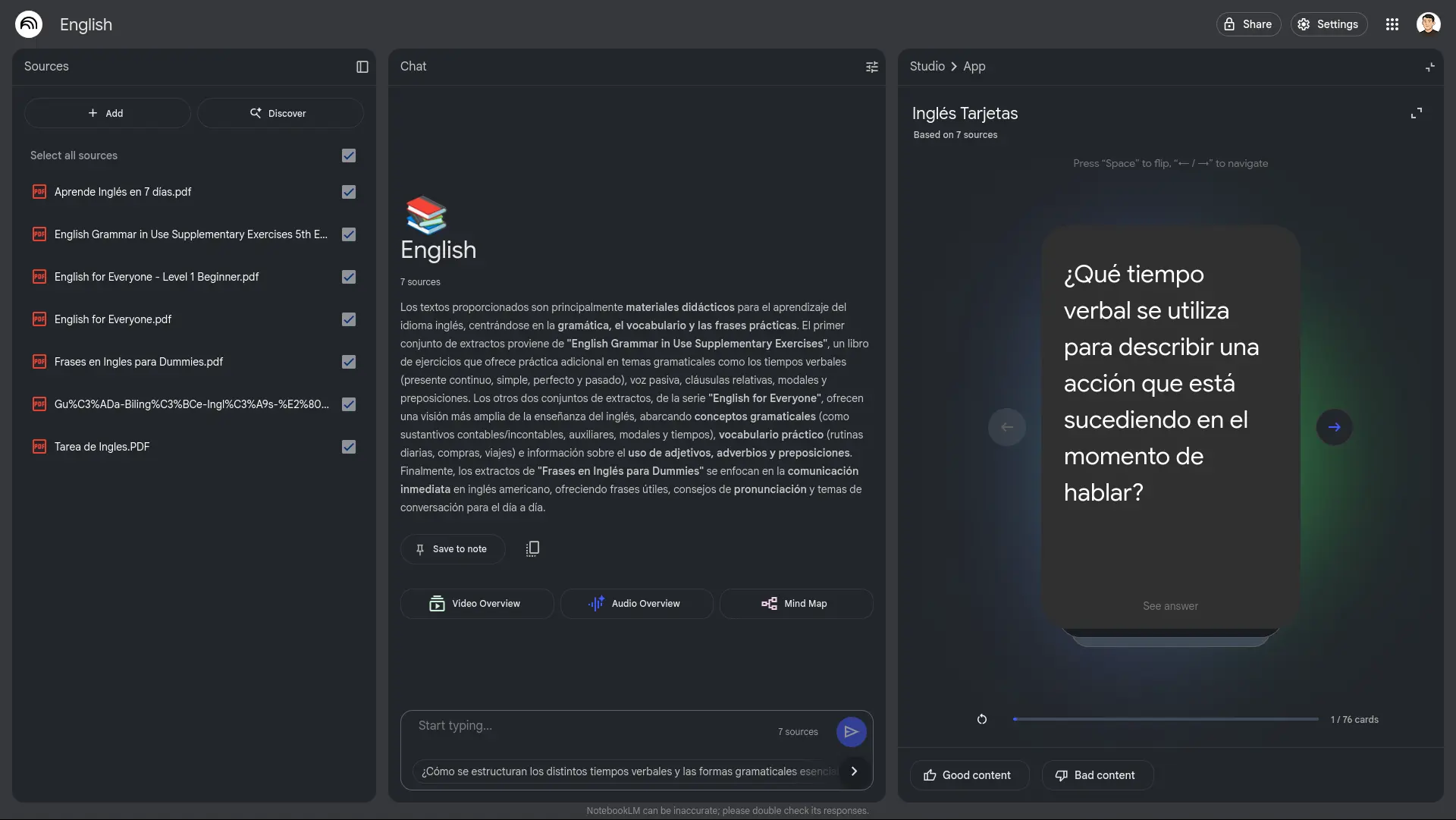
Flashcards generated by NotebookLM
Mind Maps
For visual learners, the tool can generate complete mind maps that help reinforce understanding and connect key concepts.
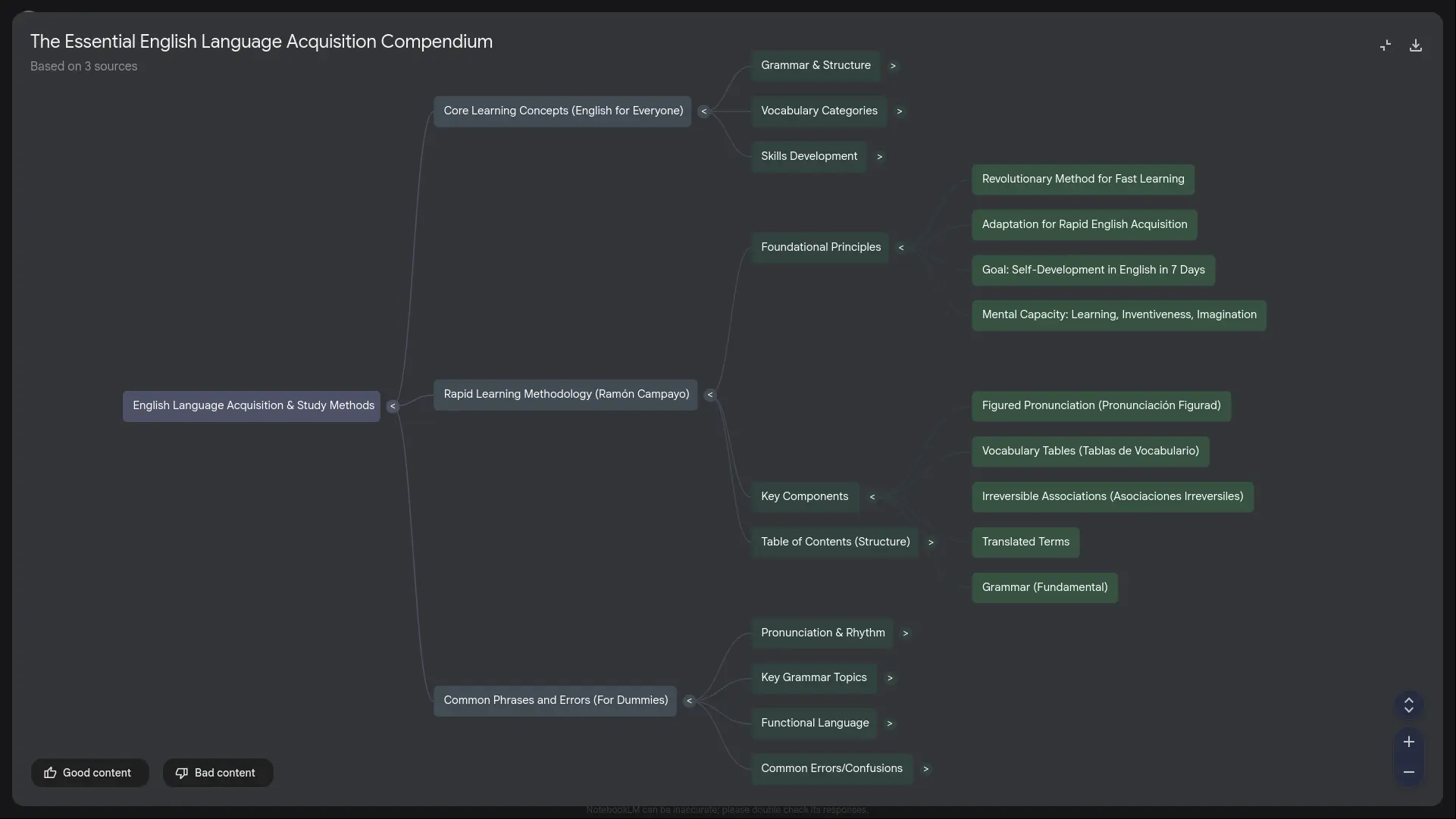
Mind map generated in NotebookLM
Conclusion
NotebookLM is a powerful assistant when used correctly. The quality of the output depends directly on the quality of your sources and the prompt design plays a crucial role in obtaining precise results.
In summary, this tool is optimized for efficiency and minimal hallucination. It helps process large volumes of information, allowing us to focus on implementation and human verification, which remains essential in any research or engineering workflow.